No hospitals named in tales of infection
Report on diseases acquired during medical procedures keeps institutions anonymous
By CATHLEEN F. CROWLEY, Staff writer First published: Wednesday, July 9, 2008
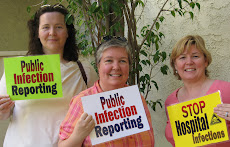
ALBANY -- Three years after a law requiring hospitals to report their infection rates to the state passed, the numbers have been released -- sort of.
The hospital-by-hospital rates for 2007 will not be fully disclosed. Instead, New Yorkers can see aggregate rates, an interim step negotiated by the hospital industry when the law was enacted in 2005.
"The promise that was made to (the hospital community) was we will do this right," said Assemblyman Richard Gottfried, chairman of the Assembly Health Committee, "to make sure it's running right before we take it public. That was an important promise and a smart promise."
The hospital-specific numbers will be revealed next year and every year thereafter. Meanwhile, the public can view the 2007 hospital-by-hospital rates on the state Department of Health's Web site, http://www.nyhealth.gov, but the names of the hospitals are masked.
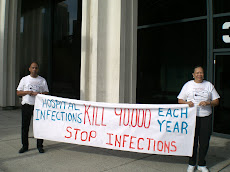
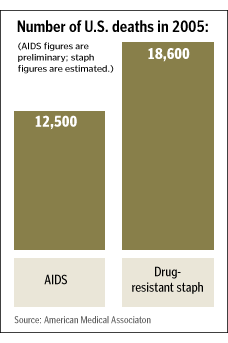
According to the federal Centers for Disease Control and Prevention, there were an estimated 1.7 million health care-associated infections nationally and 99,000 deaths from those infections in 2002. Hospital-acquired infections are considered preventable with good hand-washing, equipment sterilization and proper procedures.
Capital Region hospitals refused a request from the Times Union to voluntarily release their infection rates on Tuesday, saying they will follow the state's timeline for unveiling the information.
"It allows us and all hospitals to take a look at the statewide data and compare it to make sure it's accurate and complete and we are all comparing apples to apples," said Brad Sexauer, Saratoga Hospital's vice president of strategy and marketing development.
Arthur Levin, director of the Center for Medical Consumers and a member of the state's advisory board for the reporting system, defended the anonymity granted to hospitals this year.
Levin said it will assure that the data is accurate, and next year, "hospitals will have no excuses."
According to the aggregate figures released Tuesday, New York's infection rates mirror the nation's. For every 100 people who undergo colon surgery, about six get an infection, according to the report. For people who have a coronary bypass graft, 3.6 out of every 100 get an infection. Fewer than 1 percent develop infections related to central lines, which are tubes that snake through a vein to the heart to deliver medicine and monitor heart function.
Of all reported infections, about 10 percent were caused by methicillin-resistant Staphylococcus aureus or MRSA. The rest were caused by organisms that respond more easily to antibiotics.
Betsy McCaughey, the former New York lieutenant governor who has since founded the Committee to Reduce Infection Deaths, said the report has many shortcomings -- most notably the comparison to national rates.
"The only infection rate that is acceptable is zero," McCaughey said.
McCaughey criticized the report for highlighting risk factors for infections, like gender and obesity, without exploring the most important contributors: unclean hospitals and lax procedures.
Wednesday, July 9, 2008

Monday, July 7, 2008
100 Mistakes A Month
Serious patient errors at California hospitals disclosed in state filings
About 100 Californians a month are being harmed in adverse events considered preventable. A lawmaker proposes banning reimbursements to hospitals for some types of injuries.
By Jordan Rau, Los Angeles Times Staff Writer June 30, 2008
SACRAMENTO -- Last October, a technician at the children's hospital at Stanford University improperly connected a ventilator hose, accidentally pumping too little oxygen into a 9-day-old infant's lungs.
A month later, technicians at Dominican Hospital in Santa Cruz unintentionally placed a CT scan of one patient into the electronic file of another, leading physicians to remove the wrong person’s appendix.
Last March, Virginia Fahres, 76, died at Pomona Valley Hospital Medical Center in Pomona after a nurse gave her two drugs, neither of which her doctor had prescribed.
Those incidents were among 1,002 cases of serious medical harm disclosed by California hospitals between July 2007 and May of this year. The disclosures are the first under a state law that requires hospitals to inform health regulators of all substantial injuries to their patients.
Officially called “adverse events,” those accidents are also known as "never events" because they are considered preventable, and many safety experts say they should never happen. California patients are being injured at a rate of about 100 a month, according to data compiled by the state Department of Public Health.
"I think the never events are a wake-up call to everyone about the safety of California hospitals," said Beth Capell, a lobbyist for Health Access California, a consumer group.
Revelations of such errors have led lawmakers and hospital associations in at least seven states to protect patients from having to pay for the cost of care that went awry. In Sacramento, an assemblyman proposed a ban on reimbursing hospitals for the types of injuries tracked by the state. But when lobbyists for doctors and hospitals objected, he scaled it back to cover far fewer errors.
Four million people were admitted to California hospitals last year. State investigators found some errors occurred because hospitals failed to follow safeguards designed specifically to prevent harm.
Last July at UC San Diego Medical Center, a patient died after a nurse incorrectly programmed a medicine pump that then delivered more than twice the appropriate dose of a specialized blood pressure drug. Regulators found that the hospital's administration had been warned earlier by its own safety committee that "errors continue to occur" with that type of pump but had not taken sufficient corrective action, according to a state probe.
UC San Diego officials said they have since held repeat drills with staffers who treat patients with Flolan and examined every step in the process.
Dr. Angela Scioscia, the center's senior medical director, said the public reporting requirement is "a great opportunity to make rapid improvements" because hospitals can learn from one another's problems. "We don't want people to be afraid when they come into hospitals, because they are becoming safer and safer all the time," Scioscia said.
Under the 2006 disclosure law by state Sen. Elaine Alquist (D-Santa Clara), hospitals must inform state regulators of every occurrence of 28 different types of dangerous mistakes. Those include deaths during labor, medication errors, suicide attempts and sexual assaults.
The public health department has until 2015 to begin posting the information on the Internet, although officials said they hope to begin publishing it earlier. The most recent figures available cover the 10 months since July 2007. In that time, 466 patients developed bedsores so severe that the dead skin formed a crater or rotted through to the muscle or bone.
Another 145 patients had foreign objects such as surgical equipment left in their bodies. Thirty-four died while under anesthesia. In 41 surgeries, doctors performed the wrong procedure or operated on the wrong body part or on the wrong patient.
So far, the state Department of Public Health has levied $25,000 fines against 10 hospitals that reported adverse events. Officials said other investigations are still under way.
One hospital, Scripps Memorial in La Jolla, was fined twice for two errors that occurred last November with the same patient. First, as the patient was recovering from surgery, she was given a painkiller that is not supposed to be used after operations. When she went into respiratory arrest, the pharmacist provided a corrective medication at a dose 10 times too weak to be effective.
The patient survived. State investigators discovered that the hospital's pharmacists had not been properly instructed in the use of 10 medications, including the corrective drug, that the hospital stocked for emergencies.
The ventilator error at Stanford's Lucile Packard Children's Hospital occurred because a therapist had assembled the machine by following a diagram that had been drawn backward. Dr. Christy Sandborg, the hospital's chief of staff, said the medical team quickly noticed that the ventilator wasn't working correctly and stopped using it. The child recovered, she said, and the hospital has made changes to prevent future occurrences.
Overcrowded emergency rooms are another factor behind patient injuries. A 2006 study found that California had fewer emergency rooms per resident than any other state.
At Kaiser Foundation Hospital San Jose in March, staffers left a patient waiting in the emergency room for more than an hour after a test showed that his blood sugar was higher than the maximum measurable with a glucometer. The medics determined that he needed immediate care, but all 25 treatment bays were full. He passed out in the waiting room and died from heart failure.
About 100 Californians a month are being harmed in adverse events considered preventable. A lawmaker proposes banning reimbursements to hospitals for some types of injuries.
By Jordan Rau, Los Angeles Times Staff Writer June 30, 2008
SACRAMENTO -- Last October, a technician at the children's hospital at Stanford University improperly connected a ventilator hose, accidentally pumping too little oxygen into a 9-day-old infant's lungs.
A month later, technicians at Dominican Hospital in Santa Cruz unintentionally placed a CT scan of one patient into the electronic file of another, leading physicians to remove the wrong person’s appendix.
Last March, Virginia Fahres, 76, died at Pomona Valley Hospital Medical Center in Pomona after a nurse gave her two drugs, neither of which her doctor had prescribed.
Those incidents were among 1,002 cases of serious medical harm disclosed by California hospitals between July 2007 and May of this year. The disclosures are the first under a state law that requires hospitals to inform health regulators of all substantial injuries to their patients.
Officially called “adverse events,” those accidents are also known as "never events" because they are considered preventable, and many safety experts say they should never happen. California patients are being injured at a rate of about 100 a month, according to data compiled by the state Department of Public Health.
"I think the never events are a wake-up call to everyone about the safety of California hospitals," said Beth Capell, a lobbyist for Health Access California, a consumer group.
Revelations of such errors have led lawmakers and hospital associations in at least seven states to protect patients from having to pay for the cost of care that went awry. In Sacramento, an assemblyman proposed a ban on reimbursing hospitals for the types of injuries tracked by the state. But when lobbyists for doctors and hospitals objected, he scaled it back to cover far fewer errors.
Four million people were admitted to California hospitals last year. State investigators found some errors occurred because hospitals failed to follow safeguards designed specifically to prevent harm.
Last July at UC San Diego Medical Center, a patient died after a nurse incorrectly programmed a medicine pump that then delivered more than twice the appropriate dose of a specialized blood pressure drug. Regulators found that the hospital's administration had been warned earlier by its own safety committee that "errors continue to occur" with that type of pump but had not taken sufficient corrective action, according to a state probe.
UC San Diego officials said they have since held repeat drills with staffers who treat patients with Flolan and examined every step in the process.
Dr. Angela Scioscia, the center's senior medical director, said the public reporting requirement is "a great opportunity to make rapid improvements" because hospitals can learn from one another's problems. "We don't want people to be afraid when they come into hospitals, because they are becoming safer and safer all the time," Scioscia said.
Under the 2006 disclosure law by state Sen. Elaine Alquist (D-Santa Clara), hospitals must inform state regulators of every occurrence of 28 different types of dangerous mistakes. Those include deaths during labor, medication errors, suicide attempts and sexual assaults.
The public health department has until 2015 to begin posting the information on the Internet, although officials said they hope to begin publishing it earlier. The most recent figures available cover the 10 months since July 2007. In that time, 466 patients developed bedsores so severe that the dead skin formed a crater or rotted through to the muscle or bone.
Another 145 patients had foreign objects such as surgical equipment left in their bodies. Thirty-four died while under anesthesia. In 41 surgeries, doctors performed the wrong procedure or operated on the wrong body part or on the wrong patient.
So far, the state Department of Public Health has levied $25,000 fines against 10 hospitals that reported adverse events. Officials said other investigations are still under way.
One hospital, Scripps Memorial in La Jolla, was fined twice for two errors that occurred last November with the same patient. First, as the patient was recovering from surgery, she was given a painkiller that is not supposed to be used after operations. When she went into respiratory arrest, the pharmacist provided a corrective medication at a dose 10 times too weak to be effective.
The patient survived. State investigators discovered that the hospital's pharmacists had not been properly instructed in the use of 10 medications, including the corrective drug, that the hospital stocked for emergencies.
The ventilator error at Stanford's Lucile Packard Children's Hospital occurred because a therapist had assembled the machine by following a diagram that had been drawn backward. Dr. Christy Sandborg, the hospital's chief of staff, said the medical team quickly noticed that the ventilator wasn't working correctly and stopped using it. The child recovered, she said, and the hospital has made changes to prevent future occurrences.
Overcrowded emergency rooms are another factor behind patient injuries. A 2006 study found that California had fewer emergency rooms per resident than any other state.
At Kaiser Foundation Hospital San Jose in March, staffers left a patient waiting in the emergency room for more than an hour after a test showed that his blood sugar was higher than the maximum measurable with a glucometer. The medics determined that he needed immediate care, but all 25 treatment bays were full. He passed out in the waiting room and died from heart failure.
Wednesday, June 18, 2008
CA Hospital Infection Legislation
There are two good hospital infection bills that are moving in the CA legislature.
In a great effort, these bills were passed by the Senate and are currently in the Assembly Health Committee.
SB158, sponsored by Sen. Dean Florez and SB 1058 sponsored by Sen. Elaine Alquist.
The Committee has scheduled a hearing on June 24 for both bills. I have been asked to speak at the hearing for SB158 and share my Survivor Story in the hopes that it will touch a legislator’s heart to vote “Yes” and help save lives.
Prior to this hearing we are asking people with personal infection stories to visit legislators in Sacramento and ask them to support these bills. We don’t want these bills to die in this committee after getting this far!
There are two things you can do to help these bills pass:
If you live in the area, travel to Sacramento for the hearing. We would like to have as many members of the public there as possible, especially Survivors and family members of victims of Hospital acquired infections.
Another thing you can do is determine if your assembly member serves on the Health Committee and contact him or her.
We support these bills because they include:
SB1058 (Alquist): http://info.sen.ca.gov/cgi-bin/postquery?bill_number=sb_1058&sess=CUR&house=B&site=sen
Thanks for your support
Committee Members
Mervyn M. Dymally - Chair
Dem-52
(916) 319-2052
Assemblymember.dymally@assembly.ca.gov
Alan Nakanishi - Vice Chair
Rep-10
(916) 319-2010
Assemblymember.nakanishi@assembly.ca.gov
Patty Berg
Dem-1
(916) 319-2001
Assemblymember.berg@assembly.ca.gov
Wilmer Amina Carter
Dem-62
(916) 319-2062
Assemblymember.Carter@assembly.ca.gov
Hector De La Torre
Dem-50
(916) 319-2050
Assemblymember.DeLaTorre@assembly.ca.gov
Kevin de Leon
Dem-45
(916) 319-2045
Assemblymember.deLeon@assembly.ca.gov
Bill Emmerson
Rep-63
(916) 319-2063
Assemblymember.emmerson@assembly.ca.gov
Ted Gaines
Rep-4
(916) 319-2004
Assemblymember.Gaines@assembly.ca.gov
Loni Hancock
Dem-14
(916) 319-2014
Assemblymember.hancock@assembly.ca.gov
Mary Hayashi
Dem-18
(916) 319-2018
Assemblymember.Hayashi@assembly.ca.gov
Edward P. Hernandez
Dem-57
(916) 319-2057
Assemblymember.Hernandez@assembly.ca.gov
Bob Huff
Rep-60
(916) 319-2060
Assemblymember.huff@assembly.ca.gov
Dave Jones
Dem-9
(916) 319-2009
Assemblymember.jones@assembly.ca.gov
Sally J. Lieber
Dem-22
(916) 319-2022
Assemblywoman.lieber@assembly.ca.gov
Fiona Ma
Dem-12
(916) 319-2012
Assemblymember.Ma@assembly.ca.gov
Mary Salas
Dem-79
(916) 319-2079
Assemblymember.Salas@assembly.ca.gov
Audra Strickland
Rep-37
(916) 319-2037
Assemblymember.strickland@assembly.ca.gov
In a great effort, these bills were passed by the Senate and are currently in the Assembly Health Committee.
SB158, sponsored by Sen. Dean Florez and SB 1058 sponsored by Sen. Elaine Alquist.
The Committee has scheduled a hearing on June 24 for both bills. I have been asked to speak at the hearing for SB158 and share my Survivor Story in the hopes that it will touch a legislator’s heart to vote “Yes” and help save lives.
Prior to this hearing we are asking people with personal infection stories to visit legislators in Sacramento and ask them to support these bills. We don’t want these bills to die in this committee after getting this far!
There are two things you can do to help these bills pass:
If you live in the area, travel to Sacramento for the hearing. We would like to have as many members of the public there as possible, especially Survivors and family members of victims of Hospital acquired infections.
Another thing you can do is determine if your assembly member serves on the Health Committee and contact him or her.
We support these bills because they include:
- Public reporting of hospital acquired infection rates
- Screening for MRSA or other effective prevention techniques
- State oversight on hospital cleaning practices and policies
- State agency oversight on infection issues
Links to the bills:
SB158 (Florez): http://info.sen.ca.gov/cgi-bin/postquery?bill_number=sb_158&sess=CUR&house=B&site=senSB1058 (Alquist): http://info.sen.ca.gov/cgi-bin/postquery?bill_number=sb_1058&sess=CUR&house=B&site=sen
Thanks for your support
Committee Members
Mervyn M. Dymally - Chair
Dem-52
(916) 319-2052
Assemblymember.dymally@assembly.ca.gov
Alan Nakanishi - Vice Chair
Rep-10
(916) 319-2010
Assemblymember.nakanishi@assembly.ca.gov
Patty Berg
Dem-1
(916) 319-2001
Assemblymember.berg@assembly.ca.gov
Wilmer Amina Carter
Dem-62
(916) 319-2062
Assemblymember.Carter@assembly.ca.gov
Hector De La Torre
Dem-50
(916) 319-2050
Assemblymember.DeLaTorre@assembly.ca.gov
Kevin de Leon
Dem-45
(916) 319-2045
Assemblymember.deLeon@assembly.ca.gov
Bill Emmerson
Rep-63
(916) 319-2063
Assemblymember.emmerson@assembly.ca.gov
Ted Gaines
Rep-4
(916) 319-2004
Assemblymember.Gaines@assembly.ca.gov
Loni Hancock
Dem-14
(916) 319-2014
Assemblymember.hancock@assembly.ca.gov
Mary Hayashi
Dem-18
(916) 319-2018
Assemblymember.Hayashi@assembly.ca.gov
Edward P. Hernandez
Dem-57
(916) 319-2057
Assemblymember.Hernandez@assembly.ca.gov
Bob Huff
Rep-60
(916) 319-2060
Assemblymember.huff@assembly.ca.gov
Dave Jones
Dem-9
(916) 319-2009
Assemblymember.jones@assembly.ca.gov
Sally J. Lieber
Dem-22
(916) 319-2022
Assemblywoman.lieber@assembly.ca.gov
Fiona Ma
Dem-12
(916) 319-2012
Assemblymember.Ma@assembly.ca.gov
Mary Salas
Dem-79
(916) 319-2079
Assemblymember.Salas@assembly.ca.gov
Audra Strickland
Rep-37
(916) 319-2037
Assemblymember.strickland@assembly.ca.gov
Thursday, June 12, 2008
Time Out for Patient Safety
LeapforPatientSafety.org encourages you to take the opportunity to recognize National Time Out Day on June 18th to remind every member of the surgical team how critical it is to take time out for patient safety.
Please visit our website: www.leapforpatientsafety.org for more information on how to prevent medical errors.
Please visit our website: www.leapforpatientsafety.org for more information on how to prevent medical errors.
Wednesday, June 11, 2008
No Double Dipping on Wipes & Clothes
Antibacterial wipes can spread superbugs
Cloths used in hospitals may transfer bacteria to other surfaces, study finds
updated 1:13 p.m. PT, Tues., June. 3, 2008
LONDON - Disinfectant wipes routinely used in hospitals may actually spread drug-resistant bacteria rather than kill the dangerous infections, British researchers said on Tuesday.
While the wipes killed some bacteria, a study of two hospitals showed they did not get them all and could transfer the so-called superbugs to other surfaces, Gareth Williams, a microbiologist at Cardiff University, said.
The findings presented at the American Society of Microbiology's General Meeting in Boston focused on bacteria that included methicillin-resistant Staphylococcus aureus, or MRSA.
"What we have found is there is a high risk," Williams, who led the study, said by telephone. "We need to give guidance to the staff on how to use the wipes because we found there is a possibility of cross transfer."
MRSA infections can range from boils to more severe infections of the bloodstream, lungs and surgical sites. Most cases are associated with hospitals, nursing homes or other health care facilities.
The superbug can cause life-threatening and disfiguring infections and can often only be treated with expensive, intravenous antibiotics.
Experts have been saying for years that poor hospital practices spread dangerous bacteria, and yet many studies have shown that health care workers, including doctors and nurses, often fail to even wash their hands as directed.
The findings from a study of intensive care units at two Welsh hospitals suggest that even cleaning with antimicrobial wipes may not be enough depending on how staff use them.
The researchers found that many health care workers cleaned multiple surfaces near patients, such as bed rails, monitors and tables with a single wipe and risked sweeping the infections around rather than cleaning them up.
"We found that the most effective way to prevent the risk of MRSA spread in hospital wards is to ensure the wipe is used only once on one surface," Williams said.
Copyright 2008 Reuters.
Cloths used in hospitals may transfer bacteria to other surfaces, study finds
updated 1:13 p.m. PT, Tues., June. 3, 2008
LONDON - Disinfectant wipes routinely used in hospitals may actually spread drug-resistant bacteria rather than kill the dangerous infections, British researchers said on Tuesday.
While the wipes killed some bacteria, a study of two hospitals showed they did not get them all and could transfer the so-called superbugs to other surfaces, Gareth Williams, a microbiologist at Cardiff University, said.
The findings presented at the American Society of Microbiology's General Meeting in Boston focused on bacteria that included methicillin-resistant Staphylococcus aureus, or MRSA.
"What we have found is there is a high risk," Williams, who led the study, said by telephone. "We need to give guidance to the staff on how to use the wipes because we found there is a possibility of cross transfer."
MRSA infections can range from boils to more severe infections of the bloodstream, lungs and surgical sites. Most cases are associated with hospitals, nursing homes or other health care facilities.
The superbug can cause life-threatening and disfiguring infections and can often only be treated with expensive, intravenous antibiotics.
Experts have been saying for years that poor hospital practices spread dangerous bacteria, and yet many studies have shown that health care workers, including doctors and nurses, often fail to even wash their hands as directed.
The findings from a study of intensive care units at two Welsh hospitals suggest that even cleaning with antimicrobial wipes may not be enough depending on how staff use them.
The researchers found that many health care workers cleaned multiple surfaces near patients, such as bed rails, monitors and tables with a single wipe and risked sweeping the infections around rather than cleaning them up.
"We found that the most effective way to prevent the risk of MRSA spread in hospital wards is to ensure the wipe is used only once on one surface," Williams said.
Copyright 2008 Reuters.
Wednesday, June 4, 2008
How do you say "There's been a mistake."
From Academic Medicine
The Attitudes and Experiences of Trainees Regarding Disclosing Medical Errors to Patients
Original Post 05/29/2008
Andrew A. White, MD; Thomas H. Gallagher, MD; Melissa J. Krauss, MPH; Jane Garbutt, MB, ChB; Amy D. Waterman, PhD; W. Claiborne Dunagan, MD; Victoria J. Fraser, MD; Wendy Levinson, MD; Eric B. Larson, MD, MPH Author Information
Abstract and Introduction
Abstract
Purpose: To measure trainees' attitudes and experiences regarding medical error and error disclosure.
Method: In 2003, the authors carried out a cross-sectional survey of 629 medical students (320 in their second year, 309 in their fourth year), 226 interns (159 in medicine, 67 in surgery), and 283 residents (211 in medicine, 72 in surgery), a total 1,138 trainees at two U.S. academic health centers.
Results: The response rate was 78% (889/1,138).
Most trainees (74%; 652/881) agreed that medical error is among the most serious health care problems. Nearly all (99%; 875/884) agreed serious errors should be disclosed to patients, but 87% (774/889) acknowledged at least one possible barrier, including thinking that the patient would not understand the disclosure (59%; 525/889), the patient would not want to know about the error (42%; 376/889), and the patient might sue (33%; 297/889).
Personal involvement with medical errors was common among the fourth-year students (78%; 164/209) and the residents (98%; 182/185). Among residents, 45% (83/185) reported involvement in a serious error, 34% (62/183) reported experience disclosing a serious error, and 63% (115/183) had disclosed a minor error. Whereas only 33% (289/880) of trainees had received training in error disclosure, 92% (808/881) expressed interest in such training, particularly at the time of disclosure.
Conclusions: Although many trainees had disclosed errors to patients, only a minority had been formally prepared to do so. Formal disclosure curricula, coupled with supervised practice, are necessary to prepare trainees to independently disclose errors to patients by the end of their training.
Introduction
The rise of the patient-safety movement and the publication of the Institute of Medicine report To Err is Human[1] have drawn the attention of both the public and physicians to the problem of medical errors. Physicians are increasingly expected to recognize, prevent, and properly disclose medical errors. In particular, ethical standards and guidelines that have emerged from accrediting organizations[2] and professional bodies[3] reflect a movement toward greater transparency in communicating with patients about errors. Although a few schools provide formal instruction in disclosure, these skills are largely taught via the hidden curriculum and role modeling.[4,5] There is little known regarding trainees' attitudes about and experiences with medical errors or their experience in disclosing errors to patients.
Despite the fact that patients uniformly endorse the disclosure of harmful errors,[6,7] such disclosure currently seems to be uncommon.[8,9] Emerging research is shedding new light on the disconnect between expectations that errors will be disclosed to patients and current clinical practice. Recent survey data from practicing physicians highlight their support for the general concept of disclosure and the difficulty they experience actually disclosing errors to patients.[10,11] Although less is known about trainees' attitudes and experiences regarding medical errors and their disclosure, the available literature suggests that most trainees have been personally involved with errors[9,12,13] and that discussing these events with patients presents substantial challenges for residents.[14,15] In one study, 76% of housestaff reported that they had made a serious medical error that they had not disclosed to the patient or a family member.[12]
Academic health centers can enhance transparency in health care by preparing new physicians for the challenges of recognizing and disclosing errors. Like all accredited organizations, they are also required by Joint Commission regulations to ensure patients are informed about unanticipated outcomes in their care.[2] Improving disclosure and meeting these regulatory goals require understanding how trainees perceive, experience, and disclose errors. Therefore, we undertook a multicenter cross-sectional survey of trainees to explore their attitudes and experiences regarding medical error and error disclosure.
The Attitudes and Experiences of Trainees Regarding Disclosing Medical Errors to Patients
Original Post 05/29/2008
Andrew A. White, MD; Thomas H. Gallagher, MD; Melissa J. Krauss, MPH; Jane Garbutt, MB, ChB; Amy D. Waterman, PhD; W. Claiborne Dunagan, MD; Victoria J. Fraser, MD; Wendy Levinson, MD; Eric B. Larson, MD, MPH Author Information
Abstract and Introduction
Abstract
Purpose: To measure trainees' attitudes and experiences regarding medical error and error disclosure.
Method: In 2003, the authors carried out a cross-sectional survey of 629 medical students (320 in their second year, 309 in their fourth year), 226 interns (159 in medicine, 67 in surgery), and 283 residents (211 in medicine, 72 in surgery), a total 1,138 trainees at two U.S. academic health centers.
Results: The response rate was 78% (889/1,138).
Most trainees (74%; 652/881) agreed that medical error is among the most serious health care problems. Nearly all (99%; 875/884) agreed serious errors should be disclosed to patients, but 87% (774/889) acknowledged at least one possible barrier, including thinking that the patient would not understand the disclosure (59%; 525/889), the patient would not want to know about the error (42%; 376/889), and the patient might sue (33%; 297/889).
Personal involvement with medical errors was common among the fourth-year students (78%; 164/209) and the residents (98%; 182/185). Among residents, 45% (83/185) reported involvement in a serious error, 34% (62/183) reported experience disclosing a serious error, and 63% (115/183) had disclosed a minor error. Whereas only 33% (289/880) of trainees had received training in error disclosure, 92% (808/881) expressed interest in such training, particularly at the time of disclosure.
Conclusions: Although many trainees had disclosed errors to patients, only a minority had been formally prepared to do so. Formal disclosure curricula, coupled with supervised practice, are necessary to prepare trainees to independently disclose errors to patients by the end of their training.
Introduction
The rise of the patient-safety movement and the publication of the Institute of Medicine report To Err is Human[1] have drawn the attention of both the public and physicians to the problem of medical errors. Physicians are increasingly expected to recognize, prevent, and properly disclose medical errors. In particular, ethical standards and guidelines that have emerged from accrediting organizations[2] and professional bodies[3] reflect a movement toward greater transparency in communicating with patients about errors. Although a few schools provide formal instruction in disclosure, these skills are largely taught via the hidden curriculum and role modeling.[4,5] There is little known regarding trainees' attitudes about and experiences with medical errors or their experience in disclosing errors to patients.
Despite the fact that patients uniformly endorse the disclosure of harmful errors,[6,7] such disclosure currently seems to be uncommon.[8,9] Emerging research is shedding new light on the disconnect between expectations that errors will be disclosed to patients and current clinical practice. Recent survey data from practicing physicians highlight their support for the general concept of disclosure and the difficulty they experience actually disclosing errors to patients.[10,11] Although less is known about trainees' attitudes and experiences regarding medical errors and their disclosure, the available literature suggests that most trainees have been personally involved with errors[9,12,13] and that discussing these events with patients presents substantial challenges for residents.[14,15] In one study, 76% of housestaff reported that they had made a serious medical error that they had not disclosed to the patient or a family member.[12]
Academic health centers can enhance transparency in health care by preparing new physicians for the challenges of recognizing and disclosing errors. Like all accredited organizations, they are also required by Joint Commission regulations to ensure patients are informed about unanticipated outcomes in their care.[2] Improving disclosure and meeting these regulatory goals require understanding how trainees perceive, experience, and disclose errors. Therefore, we undertook a multicenter cross-sectional survey of trainees to explore their attitudes and experiences regarding medical error and error disclosure.
Friday, May 30, 2008
Google Your Medical Records
Google unveils medical records storage plan
Beth Israel, CVS part of new service
By Jeffrey Krasner
Globe Staff / May 20, 2008
Internet search giant Google Inc. yesterday rolled out its long-awaited Google Health product, which will enable users to upload and store medical records from many sources. Local healthcare companies working with Google on the project include Beth Israel Deaconess Medical Center in Boston and CVS Caremark of Woonsocket, R.I.
Google said users can enter their personal medical records on a site with individual password protection, giving them a way to view the information from any geographic location. The company said such access is especially useful if a patient becomes ill or is injured far from his or her primary care physician.
"We believe that patients should be the stewards of their own data," said Dr. John Halamka, chief information officer at Beth Israel Deaconess, in a statement.
"Our vision is that [Beth Israel] patients will be able to electronically upload their diagnosis lists, medication lists, and allergy lists in a Google Health account and share that information with healthcare providers who currently don't have access" to Beth Israel's proprietary site, Halamka said.
Many in the healthcare industry consider electronic medical records crucial to reducing the cost of providing healthcare and eliminating medical errors. But the start-up of electronic systems has been painfully slow because few physicians and hospitals can afford to make the investment. Meantime, there are no established standards that would allow data to be shared across different medical record systems.
For Google, the service is part of a plan to boost user loyalty by giving them more reasons to log on to Google sites.
"This really puts the users' records right in their hands," said Marissa Mayer, a Google vice president. "We realize this is just the beginning."
In addition to uploading patient records, patients can also search for medical information, similar to what is offered on the popular website WebMD.
Helena Foulkes, a senior vice president at CVS Caremark, said patients who use in-pharmacy clinics will be able to store the record of their visits on Google Health. That function will be offered first in Tennessee and eventually expand to 500 MinuteClinic locations, she said. The chain is planning to open dozens of such clinics in Massachusetts.
"In today's healthcare environment, information related to an individual's overall health is often fragmented, creating gaps in the availability of data and missed opportunities to coordinate care," said Foulkes in a statement.
Yesterday, Google disclosed a first round of partners in the electronic medical record service. In addition to Beth Israel and CVS Caremark, partners include the Cleveland Clinic, Longs Drug Stores, Medco, and Walgreens Pharmacy. Google will continue to sign up partners to ensure that its users have the broadest possible access to medical information, Mayer said.
Google Health also has a variety of features intended to help users manage their healthcare. They include a link to help users find doctors by location or specialization. Another feature, called a "virtual pillbox," notifies patients when they need to take medications, and it warns of possible drug interactions.
Patient advocates and privacy specialists have expressed concern that despite password protection, sensitive health records stored online could be compromised. In recent years, data breaches have become more common, especially in the retail industry.
Google's new site already faces competition. The Mountain View, Calif., firm's biggest rival, Microsoft Corp., has introduced HealthVault, a similar service that gives users control over who sees their information.
Revolution Health, a start-up backed by former AOL chairman Steve Case, is believed to be working on a service for electronic medical records.
Material from Globe wire services was used in this report. Jeffrey Krasner can be reached at krasner@globe.com.
Beth Israel, CVS part of new service
By Jeffrey Krasner
Globe Staff / May 20, 2008
Internet search giant Google Inc. yesterday rolled out its long-awaited Google Health product, which will enable users to upload and store medical records from many sources. Local healthcare companies working with Google on the project include Beth Israel Deaconess Medical Center in Boston and CVS Caremark of Woonsocket, R.I.
Google said users can enter their personal medical records on a site with individual password protection, giving them a way to view the information from any geographic location. The company said such access is especially useful if a patient becomes ill or is injured far from his or her primary care physician.
"We believe that patients should be the stewards of their own data," said Dr. John Halamka, chief information officer at Beth Israel Deaconess, in a statement.
"Our vision is that [Beth Israel] patients will be able to electronically upload their diagnosis lists, medication lists, and allergy lists in a Google Health account and share that information with healthcare providers who currently don't have access" to Beth Israel's proprietary site, Halamka said.
Many in the healthcare industry consider electronic medical records crucial to reducing the cost of providing healthcare and eliminating medical errors. But the start-up of electronic systems has been painfully slow because few physicians and hospitals can afford to make the investment. Meantime, there are no established standards that would allow data to be shared across different medical record systems.
For Google, the service is part of a plan to boost user loyalty by giving them more reasons to log on to Google sites.
"This really puts the users' records right in their hands," said Marissa Mayer, a Google vice president. "We realize this is just the beginning."
In addition to uploading patient records, patients can also search for medical information, similar to what is offered on the popular website WebMD.
Helena Foulkes, a senior vice president at CVS Caremark, said patients who use in-pharmacy clinics will be able to store the record of their visits on Google Health. That function will be offered first in Tennessee and eventually expand to 500 MinuteClinic locations, she said. The chain is planning to open dozens of such clinics in Massachusetts.
"In today's healthcare environment, information related to an individual's overall health is often fragmented, creating gaps in the availability of data and missed opportunities to coordinate care," said Foulkes in a statement.
Yesterday, Google disclosed a first round of partners in the electronic medical record service. In addition to Beth Israel and CVS Caremark, partners include the Cleveland Clinic, Longs Drug Stores, Medco, and Walgreens Pharmacy. Google will continue to sign up partners to ensure that its users have the broadest possible access to medical information, Mayer said.
Google Health also has a variety of features intended to help users manage their healthcare. They include a link to help users find doctors by location or specialization. Another feature, called a "virtual pillbox," notifies patients when they need to take medications, and it warns of possible drug interactions.
Patient advocates and privacy specialists have expressed concern that despite password protection, sensitive health records stored online could be compromised. In recent years, data breaches have become more common, especially in the retail industry.
Google's new site already faces competition. The Mountain View, Calif., firm's biggest rival, Microsoft Corp., has introduced HealthVault, a similar service that gives users control over who sees their information.
Revolution Health, a start-up backed by former AOL chairman Steve Case, is believed to be working on a service for electronic medical records.
Material from Globe wire services was used in this report. Jeffrey Krasner can be reached at krasner@globe.com.
Subscribe to:
Comments (Atom)